
Ghosthood by Emma Riva is shortlisted for the 2021 Author of Tomorrow, 16-21 years.
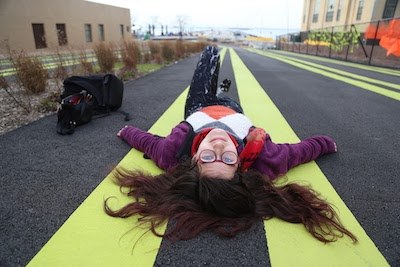
Ghosthood: A middle-class girl from Minneapolis discovers one afternoon that she has mysteriously died in her apartment. Bored with her Midwestern life, she realizes that as a ghost there are no airfare fees, passport stamps, or any obligations at all, and embarks on a plane-hopping journey across the Atlantic, during which she realizes ghosthood is not as lonely as she thought.
An Interview with Emma:
WNSF: What is your favourite book?
I have a long list of favorite books, but my favorite of all time is most likely The Long Walk by Stephen King, with Lord of the Flies by William Golding as a close second. These were books that made me first realize stories had power, and that I had the ability to write my own.
WNSF: Who is your favourite author? Or one who has inspired you and why?
My favorite author is Stephen King. I have an enormous collection of Stephen King books. People are sometimes surprised that I’m a King fan, because they consider his work to be “low culture,” or “pulp,” but his work deals with heavy questions of morality, coming of age, the pervasiveness of bigotry, and the nature of love. Though I don’t write horror myself, I try to follow King’s model of writing from your own experience and having certain signatures in your form of storytelling.
WNSF: What was your favourite subject at school?
I graduated undergrad already, so for me it’s a “was.” I have a degree in Writing, so that would be a lame answer, and instead I’ll say that at college outside of my major I really enjoyed my coursework in Jewish studies and Japanese. I also took a really interesting class at my university, Eugene Lang College, called “The Social Life of Books,” with Dr. Alexandra Chasin, that was about the role books as objects play in consumer society. We had to go on bookstore visits and write about them – I went to a “spiritual goods” bookstore I remember, and then I had to go to a Barnes & Noble in Brooklyn and compare it. It really opened my eyes to the cultural machinations of “literature” as an idea, and Alex is a teacher I’ve had a longstanding relationship with since.
WNSF: What does ‘adventure writing’ mean to you? Why did you choose to try your hand at an adventure story?
“Ghosthood” isn’t a traditional adventure story, because it involves breaking the rules of corporeality for the adventure to take place. I can’t remember who said this, but an old writing teacher of mine showed me a quote that was something like all stories boiling down to either a character going on a journey or a stranger coming to town. To me, adventure writing is about approaching storytelling with a sense of curiosity and taking ancient tropes that have meant things to humankind for centuries and putting your own spin on them. As humans, we have an inherent draw to certain ideas, like the desire to explore and to expand our minds. I like that there’s something really universal about the desire to know more about our experience in this world we actually know so little about.
WNSF: If you could ask an author anything, what would you want to know?
What are you obsessed with? I’ve found everyone has one, and it’s usually evident in their work—I learned this model from a teacher of mine in high school, the poet Harry Bauld. It’s not always something straightforward, but I think everyone’s work has connecting themes of some kind that have roots in their life.
WNSF: Who would you consider one of your heroes and why?
Oh, that’s a hard question. I don’t really like putting people on a pedestal in that way. But some of my influences both on a personal and professional level have been Kate Reuther, Jane LeCroy, Miller Oberman, Harry Bauld, Alexandra Chasin, Emily Skillings, Adam Casdin, Riva Preil, Amanda Peled, Hannah Greene, Aurora Dimitre, Vittoria Benzine, and David Burr Gerrard. My mom, Cecilia Malm, is also a writer and uses her ability for good through the profession of grant-writing, which is something I have always found to very noble and inspiring.
WNSF: What is the most adventurous thing you would like to do, or place you would like to visit and why?
Compared to a lot of people, I’ve had a fairly adventurous life already given that I’ve had the opportunity to travel and grew up in New York City, a place where a lot of people adventure to. But I’m really attracted to extreme and awe-inspiring natural places. I’d really like to go to Antarctica, or to Tierra del Fuego. Something that just blows my mind is that for a large portion of history, most of the western world just didn’t know Antarctica was there. Can you imagine being alive when mass media found out that Antarctica existed? Now with the amount of information and science we have, it seems kind of improbable that there could be a giant landmass on the earth we didn’t realize was there, and I think we’ve gotten sort of cocky about our ability to know things. But it’s very humbling to think that for hundreds of years, a completely untouched continent of ice existed. I’d like to see it in my lifetime.
WNSF: Where do you find inspiration for your stories?
“Ghosthood” was originally written in a multi-genre workshop class with Emily Skillings, and I have to admit I have no memory of what the prompt was for it. I know my workshop partner, my friend AJ Vitiello, really encouraged me to keep with the piece. A lot of my stories start with a “What if…” question, or a situation I find interesting, and then going from there. In real life, there’s a limit to the amount of things we can say or do, but in fiction, you can portray anything you put your mind to.
This particular piece reflects a lot of the frustration and aloneness I felt during the COVID-19 pandemic. Like Reva (who I did not name after myself, by the way, that was incidental—her name actually comes from a character in Ottessa Moshfegh’s My Year of Rest and Relaxation), I would much rather be exploring than be stuck in one place, and the pandemic was a difficult time to have to quash that mindset. So, I approached this piece with the idea of taking that frustration to an extreme. What if you really were all alone, but suddenly had the ability to go anywhere you wanted? Would it be better? I have this habit of opening up Google Maps and scrolling to random places I’ve never seen before. I’m really interested in places at the far edges of landmasses, so that was how I came upon Petropavlosk-Kamchatsky. I have been to both the Minneapolis and Anchorage airports referenced in the piece, but I have never been to Petropavlosk-Kamchatsky where the bulk of it takes place. Anyone reading this want to give me a travel grant to go there for research purposes?
WNSF: If you could time travel, where would you go and why?
I think I’d want to go to Heian period Japan and talk to Sei Shonagan. She’s a really fascinating writer and if you were an upper-class person in that society, poetry and literature were integrated into your life in a way that would be very unusual now. I think it would be cool to experience, since I certainly am not royalty in contemporary society.
WNSF: What three words would you use to describe your story?
Contemplation, wanderlust, absurdity.