
Ayesha Harruna Attah's The Deep Blue Between is shortlisted for the 2021 Best Published Novel award. Twin sisters Hassana and Husseina’s home is in ruins after a brutal raid. This is not the end but the beginning of their story, one that will take them to unfamiliar cities and cultures, where they will forge new families, ward off dangers and truly begin to know themselves.
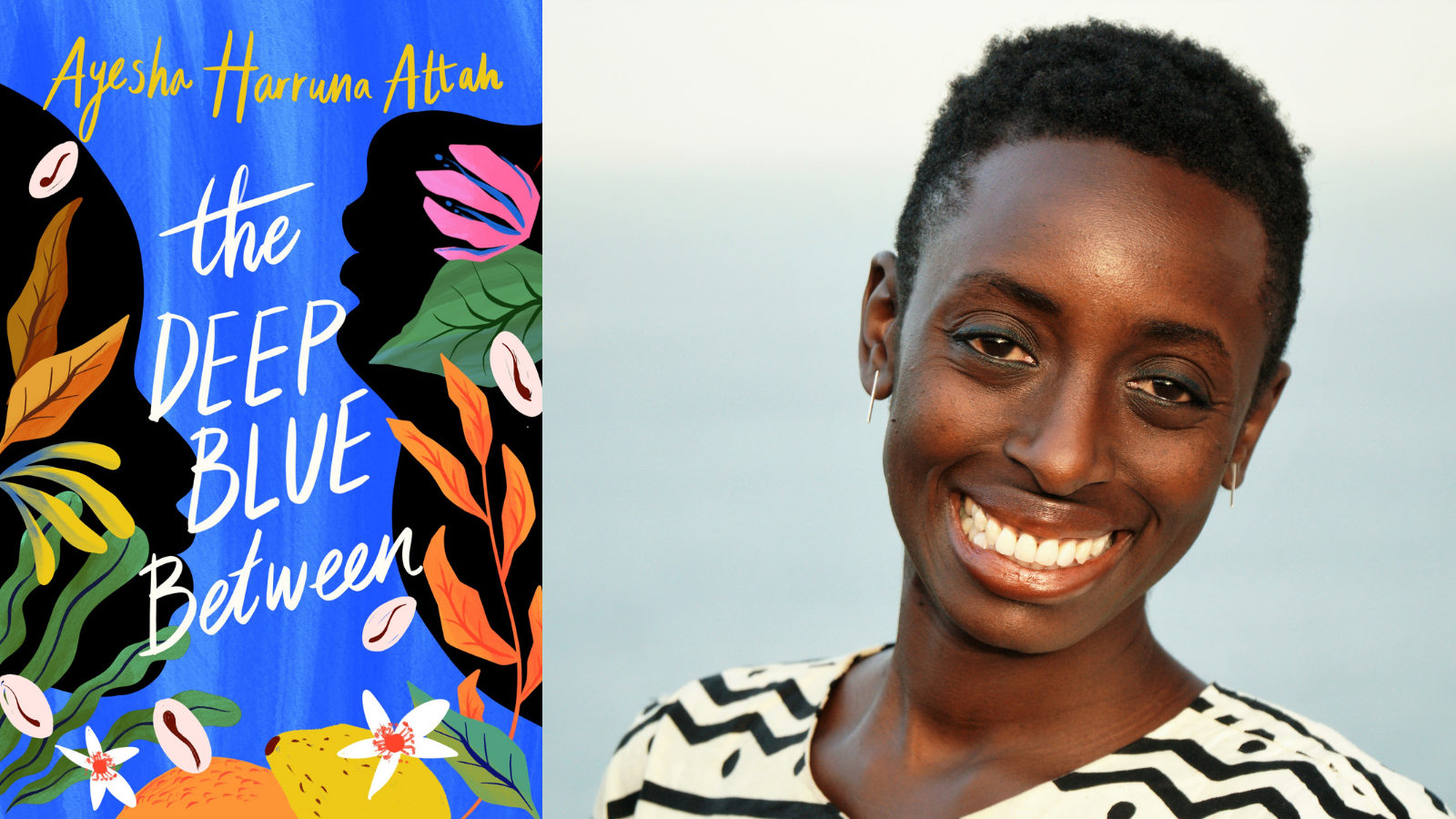
As the twins pursue separate paths in Brazil and the Gold Coast of West Africa, they remain connected through shared dreams of water. But will their fates ever draw them back together? A sweeping adventure with richly evocative historical settings, The Deep Blue Between is a moving story of the bonds that can endure even the most dramatic change.
About the Author:
Ayesha Harruna Attah grew up in Accra, Ghana, and was educated at Mount Holyoke College, Columbia University, and New York University. She is the author of the Commonwealth Writers' Prize nominated Harmattan Rain, Saturday Shadows, The Hundred Wells of Salaga, currently translated into four languages and finalist of the William Saroyan Writing Prize, and the YA novel The Deep Blue Between. Her romcom debut novel Zainab Takes New York is coming out in 2021. Her writing has appeared in the New York Times, New York Times Magazine, Elle Italia, Asymptote Magazine, and the 2010 Caine Prize Writers’ Anthology. Attah is an Instituto Sacatar Fellow and was awarded the 2016 Miles Morland Foundation Scholarship for non-fiction. She lives in Senegal.
WNSF: What does adventure writing mean to you? Would you have considered yourself an adventure writer before being shortlisted for the Prize?
Ayesha: Adventure writing calls to my mind literature that has its characters and the reader constantly on the move – in space and time – and that offers the reader the chance to meet several colourful characters. I hadn’t quite thought of myself as an adventure writer before the shortlisting, but when I look back at my writing, most of my books have been filled with that strong sense of movement and a motley crew – some that readers love and others that they hate with gusto.
WNSF: Are there any particular books or authors which have made a lasting impact on you?
Ayesha: One Hundred Years of Solitude by Gabriel Garcia-Marquez and Invisible Cities by Italo Calvino are books I keep going back to. The sense of place is so vivid in both novels, that I feel like I’ve visited even the imaginary worlds of Calvino’s mind.
WNSF: Can you tell us about any adventurous experiences in your life? Have they influenced you as a writer or your writing?
Ayesha: As I child, I dreamt wildly of seeing the world, to the point that I began to make up stories of all the places I’d visited – India! China! – and I’d tell my friends these lies. Once I got my passport and started making a bit of money, I never said no to any adventure that came my way. As a college student in the U.S. (already on adventure from Ghana), I studied abroad in Paris. Over the years, my wanderlust has led me to places like New Orleans, Panama, Addis-Ababa. Sometimes, these visits were to see a friend; sometimes, I travelled by myself; sometimes, it was work. Always, it was the chance to see the world and the people that populate it.
Before we got married, my husband and I travelled from Paris to Dakar in a van he’d just bought. We decided that if we survived that adventure – dealing with corrupt border agents, traveling through the Sahara desert – we could survive the adventure of marriage too. Since then, we’ve gone on a boat from Dakar to Cape Verde, with a five-month old baby in tow. In every single one of these places, I try to learn of the story of the place, and these stories end up feeding my work in various ways. I was so taken with Bahia in Brazil that I had to include it in a novel.
WNSF: The Deep Blue Between is historical fiction, why did you choose to write about this time? Or these particular places in this time?
Ayesha: The Deep Blue Between came about because I’d written a book about my great-great grandmother who was enslaved in the northern part of Ghana in the late 19th century. After I finished her book, The Hundred Wells of Salaga, two of the girls began to haunt me. I needed to find out more about them. I had spent time in Bahia, in Brazil, and found many startling connections with the region my great-great grandmother had come from. It was as if one of my family members had ended up there and also needed her story told. Sometimes, it feels as if now that I’ve started writing the past, people in my family (alive and dead) have decided to use me as their medium!
WNSF: Can you tell us about a particular relationship between two characters in your novel and how you made it feel genuine?
Ayesha: It’s a hard to choose one, but I especially love the story of Hassana and Amerley, two teenaged girls who meet and fall instantly in friendship love. They go on all sorts of scrapes in the 19th century town of Accra.
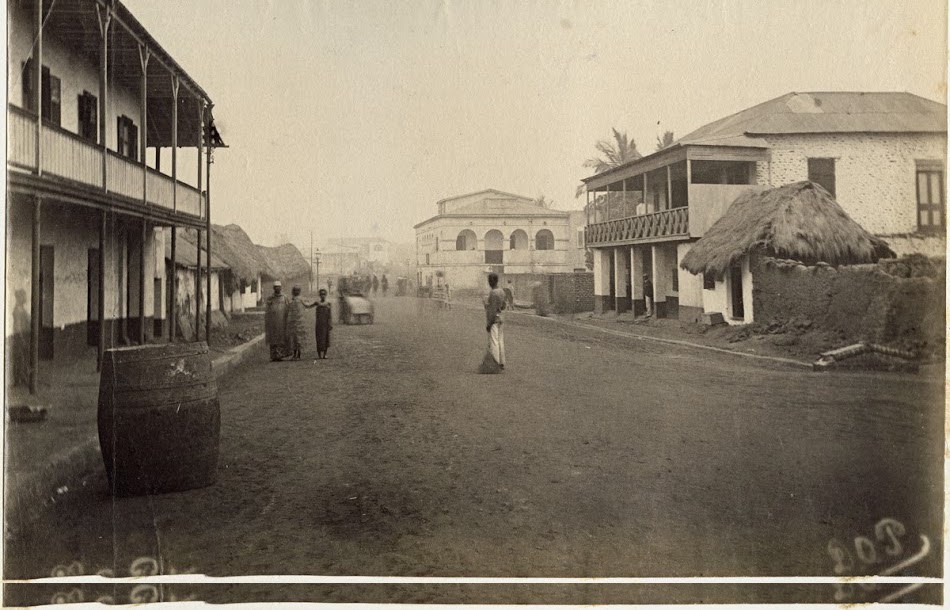
I wanted them to show the reader what it was like to live as a girl in that era, but I also wanted their friendship to feel true to a girl reading today. They went into shops – places where they really couldn’t afford anything; they tried on clothes; in their aimless walks, they saw all sorts of unsavoury characters and relished watching them. I drew on my own childhood and how my friends and I would get into all sorts of adventures by just walking around the neighbourhood with nothing else to do.
WNSF: A strong sense of place is vital to any great adventure story. What role does research play in your writing? How did you make your setting feel realistic?
Ayesha: I think research led me to historical fiction and adventure writing. Before I put down a word, I have to immerse myself into the places, spaces, and times I’m writing about. I study maps, literature, advertisements, everything I can about the period I’m working on, and when I’m able to see, smell, feel what it would be like, then I get started.