
Diana McCaulay's A House for Miss Pauline is shortlisted for the 2025 Adventure Writing Prize.
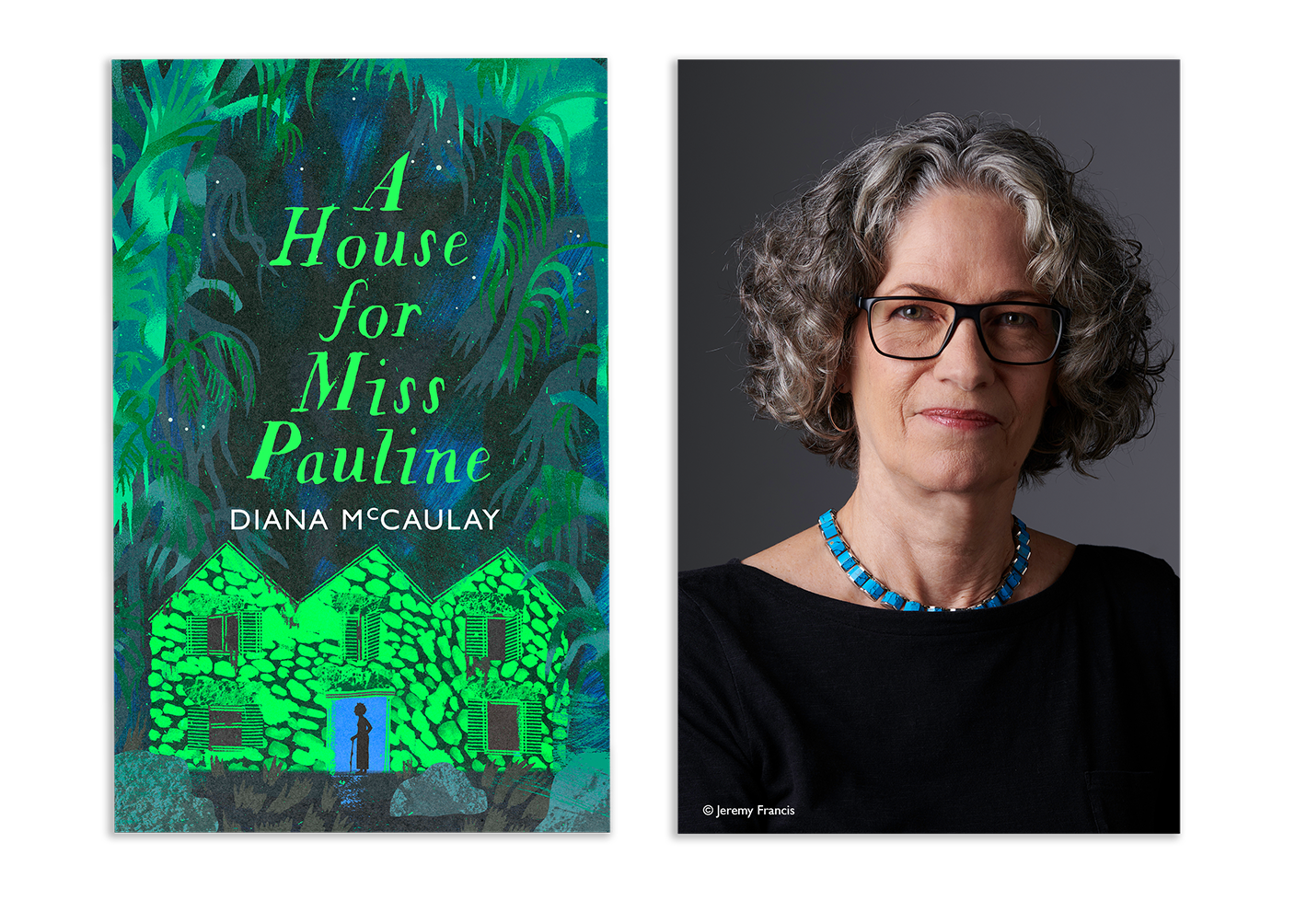
When the stones of her home begin to rattle and call out to her in the quiet of the night, Pauline Sinclair knows she will not live to see her 100th birthday. From educating herself through stolen books to becoming one of the most successful ganja farmers in the area and raising a family, Pauline has lived a life on her own terms in Mason Hall, a rural Jamaican village.
Yet these whispering walls promise to topple the foundations of her security and exhume Pauline's many buried secrets, including the mysterious disappearance of the man who came to claim the very land on which she built her home, stone by stone, from the ruins of a plantation.
Compelled to make peace before she dies, Pauline decides to leave the only home she has ever known on a final, desperate mission to uncover truths she could never have imagined...
Lyrical, funny, eerie and profound, A House for Miss Pauline tells a timely and nuanced tale, infused with the patois and natural beauty of Jamaica, which questions who owns the land on which our identities are forged.
An Interview with the Author:
WNSF: Congratulations on being selected for the 2025 Wilbur Smith Adventure Writing Prize shortlist! What does adventure writing mean to you? Would you have considered yourself an adventure writer before being shortlisted for the Prize?
Diana: For me, adventure writing is about a perilous journey of some kind – the characters face obstacles to overcome and they are seeking something – knowledge, a lost place, a story to uncover, a physical item, escape, transcendence, understanding, self-discovery. Although I mostly think of adventure writing in the context of the natural world, this does not always have to be true. No, I wouldn’t have considered myself an adventure writer before being shortlisted for the Prize – it came as a huge, but welcome surprise. I love adventure stories – when I was a child, reading Nancy Drew and Hardy Boys, I would ask my father where I could go to have an adventure.
WNSF: Are there any particular books or authors which have made a lasting impact on you?
Diana: This would be a very long list! So I narrowed it down to adventure stories and writers. As a child, The Lion, the Witch and the Wardrobe by C.S. Lewis – I can even remember the place where I read it, a country house with a window seat on a rainy weekend. As a young adult, The Adventures of Goodnight and Loving by Leslie Thomas – at one point I wanted to do that, just head off with a small backpack, and write about it. I never have, though. And more recently, Into the Wild by Jon Krakauer – I could not put it down, read until 4am.
WNSF: Can you tell us about any adventurous experiences in your life? Have they influenced you as a writer or your writing?
Diana: I was born on a Caribbean island to parents who took me outdoors. My mother told me I went to sea before I was three months old – I don’t know how I really felt about that! But the things I do remember – snorkeling Jamaica’s reefs, learning to waterski, fishing, going on picnics to various places – beaches, rivers, mountains - hiking, riding horses – these I cherish. One particular experience I value and still think about was an Outward Bound trip to the Boundary Waters in the USA, near the Canadian border – a canoeing trip. I was in my late thirties then with back problems, and I was afraid I would not be physically capable of carrying a heavy backpack, let alone portaging a canoe, and I knew the weather would be much colder than I was used to. But it was one of the most memorable experiences of my life, particularly the overnight period I spent alone on a small spit of land on the bank of one of the lakes with only a sheet of plastic, water, a journal and some trail mix. That trip and the hours alone taught me so much about my own abilities to conquer fears and do things I thought were beyond me. My early experiences in nature later led me into environmental activism, and that itself was an adventure of a different kind, a complex journey with plenty of risk. I founded and led the Jamaica Environment Trust for almost 30 years, and I still sometimes speak for the land, the people and the non human inhabitants of my island home. In terms of my writing, all the years spent outdoors taught me to love and observe nature closely, so I do focus on creating a deep and complex sense of place in my novels and stories.
WNSF: The Librarians and Library Staff who read, reviewed and selected your book for the shortlist asked the following questions: "Given the unique relationship between the old and new in Jamaican society, how do you see the role of younger generations in bridging the gap between these two worlds while honouring both?"
Diana: I like to imagine a new closeness emerging between our elders and the young, as happens in A House for Miss Pauline. Many Jamaicans have experienced strong relationships with grandparents – I did too – but often this was based on discipline, rather than a reciprocal nurturing. That’s what I would like to see – our elders showing the young people how to crack an almond to get at the nut, how to plant a garden, roast a breadfruit over a coal fire, and the youngsters showing the elders how to use a computer or a smart phone. Many of our old-time stories and a deeper, slower way of life are being lost and I think that is a shame. It is also true that if you’re older, you do need the help of the young to navigate this new digital world and I think these relationships could be rich and satisfying.
WNSF: Another asked: "Miss Pauline is a fantastic, believable, feisty treat of a character, unimpressed by the trappings of modern life, single-minded and determined in a way anyone younger than her (almost everyone!) can only admire and seek to emulate. There is also a darkness in her. Were you ever tempted to push that aspect of Miss Pauline’s character further still?"
Diana: I think most of us have qualities of light and darkness in our character and Miss Pauline experienced many tragedies and losses in her long life which could easily have turned her bitter and mean. But she also did not want to succumb to the darkness, and she escaped that for several reasons, one of which was by having such a foundational relationship with her father and the love of her best friend. So no, I didn’t want the darkness to win her over. And Jamaica itself has a turbulent and tragic history about which much has been written. But here the island still is, here we Jamaicans still are – and so is the light.
WNSF: They followed that question up with another: "Equally, Miss Pauline is on a quest, clearing her conscience and in doing so, having to engage with individuals not far removed from those that oppressed her relatives under the colonial regime. If you were in her place, would you be able to be so magnanimous towards those people?"
Diana: Ohh, now that is the heart of the matter, no? Are we responsible for the acts of our ancestors? Should we be blamed for them? If most of us are of mixed blood, with many tributaries of ancestry, differing only as to degree, which part of ourselves should we hate? I come down on the side of not being responsible for the actions of my ancestors, but being responsible for ensuring my own life does not continue these old oppressions, that I must seek to listen and understand when others stand in a different place due to wholly different life experiences and histories. My environmental work taught me a lot about listening, about respect, and about my own privilege.
WNSF: A strong sense of place is vital to any great adventure story. What role does research play in your writing? How did you make your setting feel realistic?
Diana: Because I have lived all my life in the place where all my books have been set, I do more observing than research. I do visit any specific place I’m writing about, because memory is tricky and things do change over time.
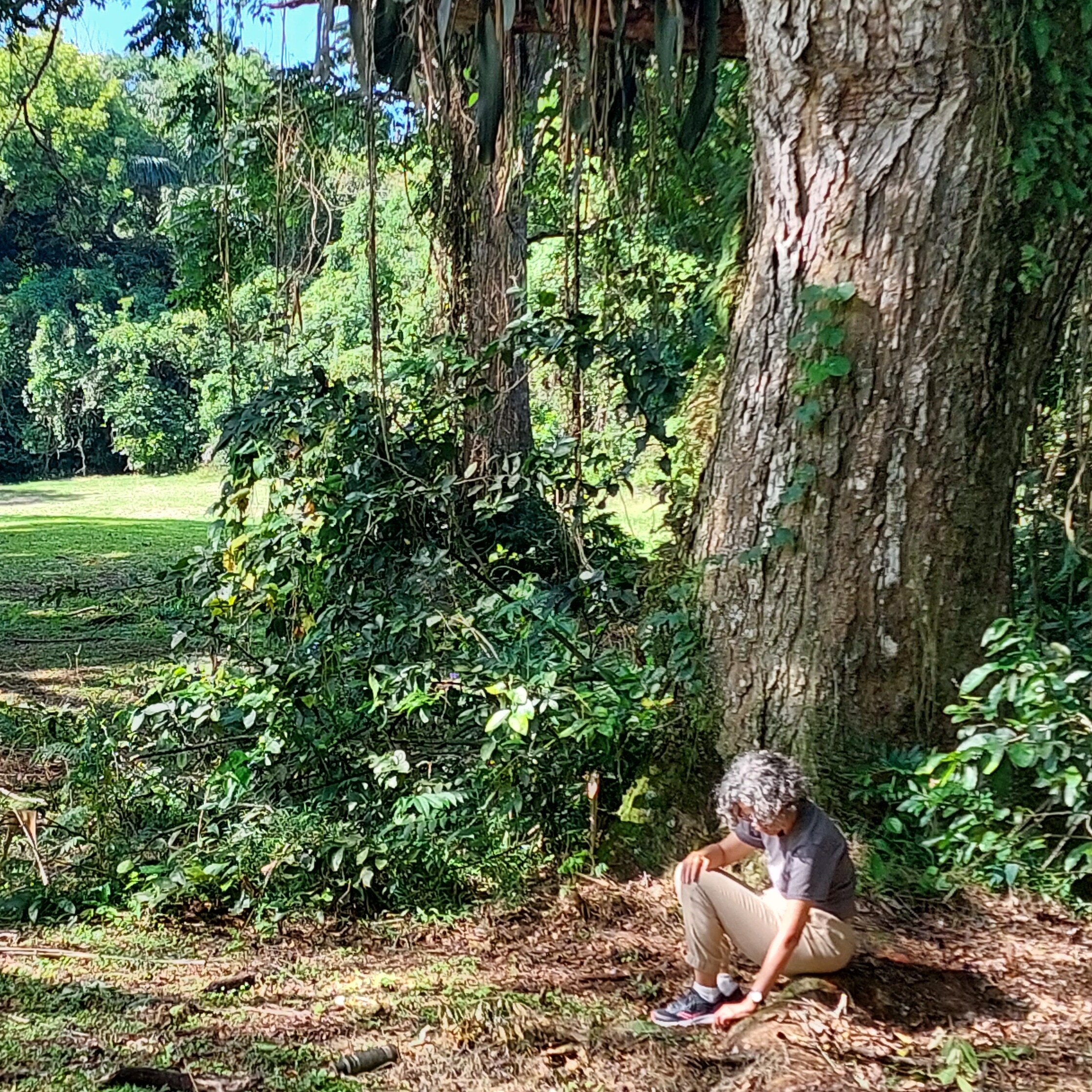
Diana in St Mary, 2023
I take careful notes about not just how a place looks, but how it sounds and smells, what types of creatures I see, do I know the names of the plants, do the people who live there know the names of the plants – they often have different names than the ones I know, certainly different from the names in a textbook. Have things changed since my last visit? In what way? Often they have.
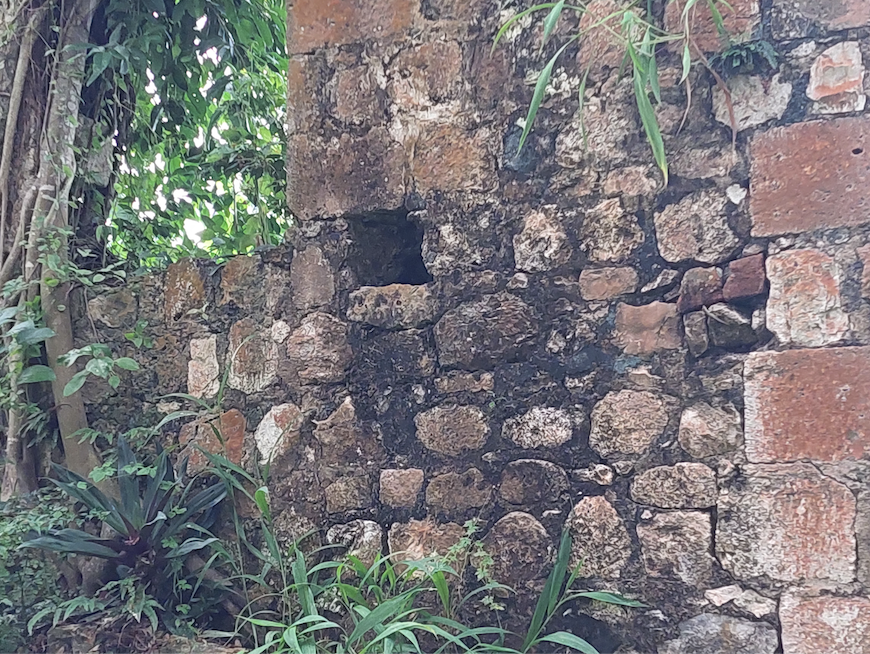
Stones and Bush, Tryall 2022
I try very hard to do justice to a place, to celebrate it, almost to make it a character in my books. Because I myself am so grounded in Jamaica, and because I spent so many years travelling the island for my environmental work, I hope I’m able to make a reader see and feel the island in my novels and stories.
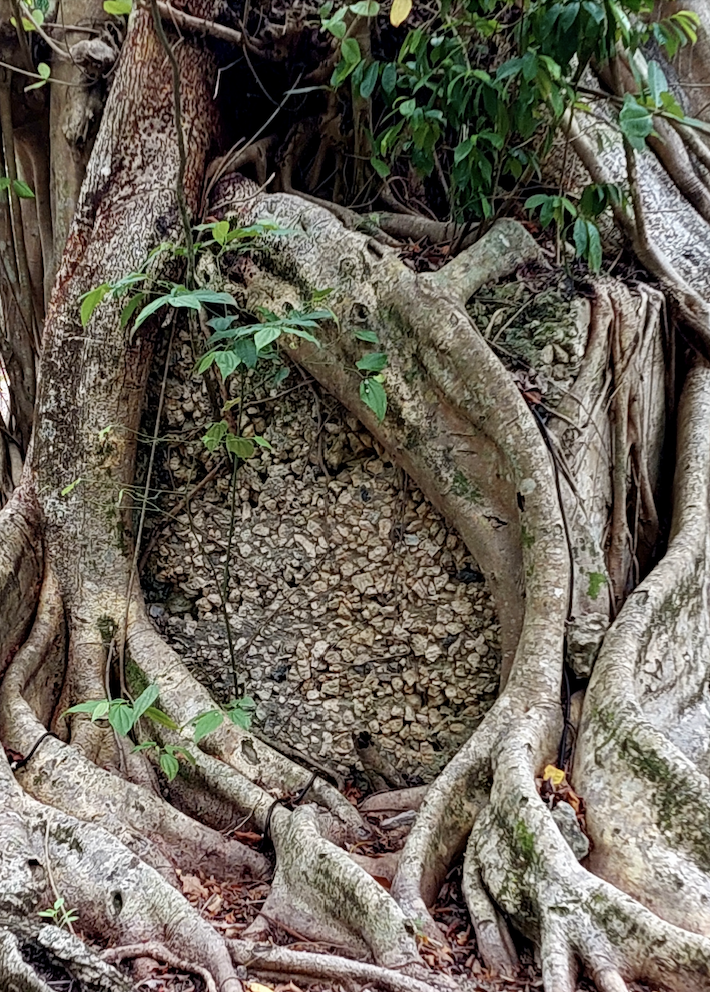
Tree and Ruin Goldeneye, July 2024
WNSF: What would you say is the hardest thing about writing? And the easiest?
Diana: For me, the hardest thing about writing novels is the length of time it takes – I am not a patient person, sadly. I want to have an idea or imagine a character and then the whole thing just tumble onto the page in a matter of weeks – okay, months would be fine. But given that most writers have day jobs of some sort, the reality is that you’ll snatch a few hours every day (if you’re lucky) to write, and you’ll slowly build word upon word, and things will surprise you, and there will be wrong turns, and some days the writing will zip along, and other days every word is tired and boring and pointless. Then, what you want is for the first person who reads your draft to say: This is magnificent! Do not change a word! But of course, that never happens, because writing is rewriting, so after you first write those purely aspirational words, THE END, then you go back to the beginning and do the real work of making a novel. And then, even when you have a good manuscript, at least the best you can make it, and you’ve done this alone, just you and these imaginary people, submission, contracting, and publication all take a long time as well. The easiest for me is ideas – my brain just churns out ideas and characters all the time. Trouble is, it’s hard to pin them down, sometimes they just slither away or evaporate like smoke, sometimes they hang around but take you nowhere. My brain is an ant’s nest of ideas. And I guess that’s a good thing, although sometimes it’s exhausting.
WNSF: Can you share a little bit about how you went about writing A House for Miss Pauline?
Diana: The gestation of this book was long and many faceted. It started when I was at a writer’s workshop at a plantation great house in roughly 2003, courtesy of an old friend. I was staying in a small room under the front stairs, and when I went to bed at night, I wondered what the room was used for back in slavery time. Was it a storeroom for tools? Or did a female enslaved woman live there, in order to be near to the household? Well, that woman took up residence in my brain. Then, years later, my environmental work took me to a different ruined great house, same area, which was built over a sinkhole, and I thought – huh. Why did they do that? Was the sinkhole a toilet, or a source of fresh water? I saw a drawing of this house, a print, that stayed with me, it was quite grand but also ghostly. More years passed. Then I heard that a man, a foreigner, had taken the stones of the house over the sinkhole to build his own house, and that struck me as wrong. But why? The stones were by then scattered and the great house had fallen. The woman in my brain was much older by this time, and she put this question: Why a White man took the stones? Why not a Black woman? And so that got me thinking about how we might memorialize places where the atrocities of enslavement took place, but are also often in very beautiful landscapes, and the constructions were done by the enslaved, not the enslavers, and was there a way the old stones could be used to build a new Jamaica? Enter Miss Pauline.
I also had a great aunt Sybil, who I knew quite well, who was born in 1896 and lived until she was 102, being pretty active until her 100th birthday, so I thought a 99-year-old protagonist was believable.
WNSF: Thank you so much for answering our questions, Diana. And congratulations once again on being shortlisted for the 2025 Adventure Writing Prize!
If you read and loved A House for Miss Pauline as much as we did, you can vote for it to win the Prize here. If you haven't yet read it, you can purchase your copy here:
About the Author:
Diana McCaulay is a Jamaican environmental activist and the award-winning author of five novels. Winner of the Gold Musgrave Medal, Jamaica's highest award for lifetime achievement across the arts and sciences, and twice Winner of the Commonwealth Short Story Prize for the Caribbean region (in 2022 and in 2012), she has also been shortlisted for the IMPAC Dublin Award, among other nominations, and is the winner of the Watson, Little 50 Prize for unrepresented writers aged 50+.
What Our Reviewers Said:
"Miss Pauline is one of the best characters I’ve read this year, and McCaulay’s writing has a way of transporting you to the island and across Miss Pauline’s travels and adventures as she seeks to resolve her affairs."
"There are broad themes running through this novel - atonement for a terrible crime, of racial injustice, of the prevalence of misogyny in society and especially in the world inhabited by Miss Pauline. There are no easy resolutions to this, but it's a lyrical and descriptive evocation of a woman out of place in the world beyond the one she has created for herself."