
James Swallow's Rogue is shortlisted for the 2021 Best Published Novel award.
In modern espionage, every action has a reaction. One wrong move could sink an entire region into turmoil - even war. Ex-MI6 operative Marc Dane understands this better than anyone. Dedicating his life to protecting the country means he's collected enemies, and a lot of them. But for those hellbent on bringing the West to its knees, each failed plot has one thing in common: The Rubicon Group, the elite private intelligence agency, and Dane's employer. Destroy Rubicon, and the world order falls with it.
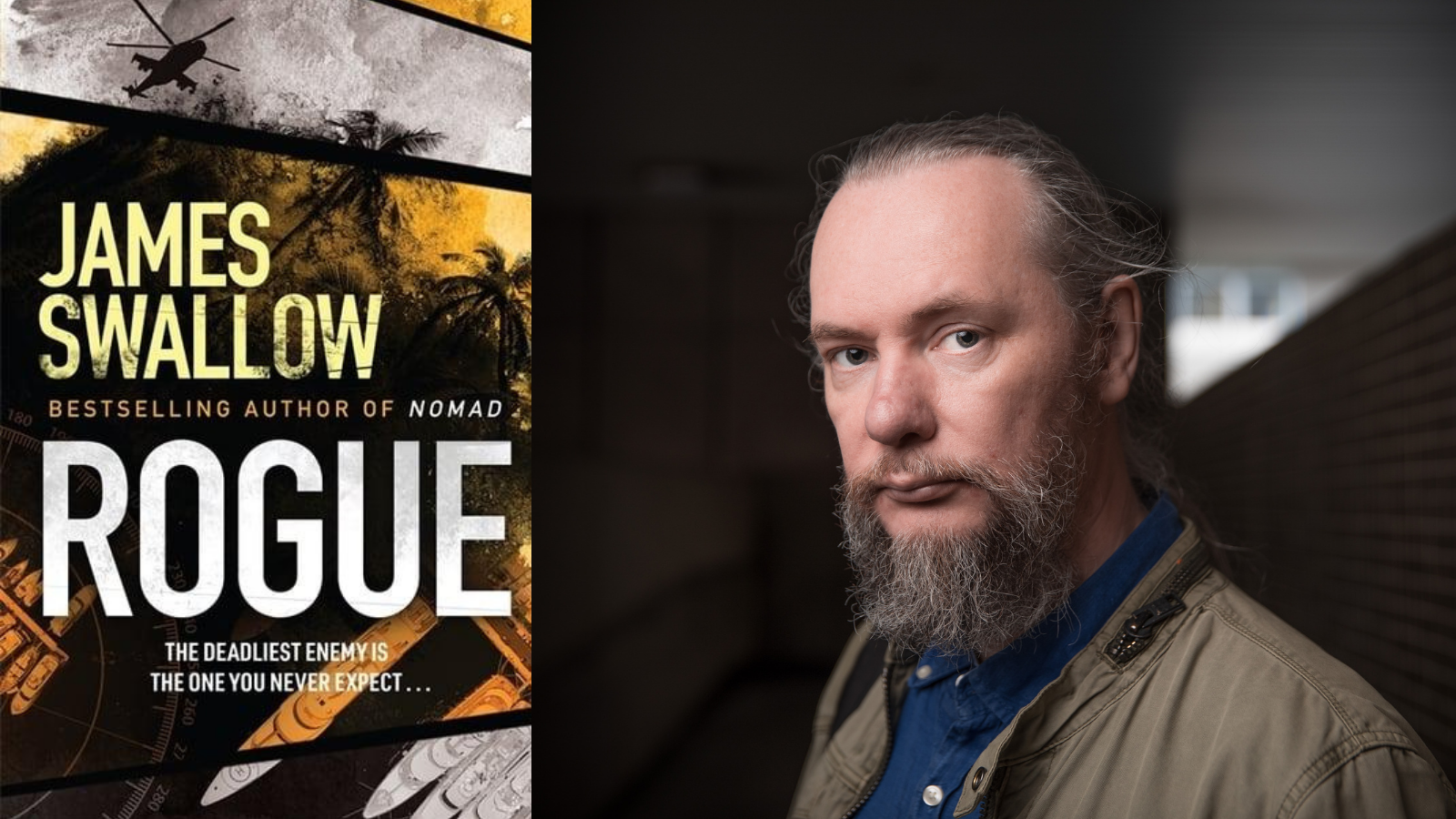
With the clock ticking, Dane, along with sniper partner Lucy Keyes, must unpick a monstrous and deadly conspiracy that stretches from the marinas of Monaco to the mountains of Mozambique - one that threatens not only Rubicon, but ultimately the lives of millions of innocent civilians. And time is fast running out...
About the Author:
James Swallow is the New York Times, Sunday Times and Amazon bestselling author of Nomad, Exile, Ghost, Shadow and Rogue. He is a BAFTA nominated scriptwriter, a former journalist and the award-winning writer of over fifty books and numerous scripts for radio, television and interactive media. He lives in London, and is currently working on his next novel.
WNSF: What does adventure writing mean to you? Would you have considered yourself an adventure writer before being shortlisted for the Prize?
James: For me, the term “adventure writing” conjures up stories with gripping, exciting, fast-paced narratives – be they fiction or tales of real world daring-do. Adventure writing is about bringing those compelling stories out of the wilderness and into our lives, so someone sitting up in bed or taking a long and dull journey can be transported to a thrilling world for just a little while. It’s escapism, pure and simple!
I’m delighted to be considered an “adventure writer”! Certainly, all the fiction I’ve written over the years have been to one extent or another, adventure stories. I love to take my characters out of their comfort zones and thrust them into danger, where angels fear to tread. I like to read stories with a shot of adrenaline in them, and I aim to write those kind of tales as well.
WNSF: Are there any particular books or authors which have made a lasting impact on you?
James: There are three specific books I consider having had the most influence on me; first is Thunderball by Ian Fleming. I was fascinated by his descriptive method and that certain kind of whip-crack sentence structure he excelled at. Reading Fleming taught me lessons about the essential pitch of a thriller, and it stoked my ambition to one day write; second is Neuromancer by William Gibson - I read it in the Eighties, around about the time I was starting to convince myself that I might try to be an author, and Gibson’s laconic voice and penchant for hyper-nuanced detail absolutely left an imprint on me. The seamless sense of location and the pace made me want to write with the same confidence; and third is The Hitch Hiker’s Guide to the Galaxy by Douglas Adams – it always makes me laugh, even though I’ve read it countless times. Although the novel is full of wild sci-fi ideas, it’s always grounded in a sort of “amazing-mundane” and I like the notion of communicating the essence of a story like that.
WNSF: Can you tell us about any adventurous experiences in your life? Have they influenced you as a writer or your writing?
James: I’ve been lucky enough to travel widely since an early age, and the excitement of visiting a new city in a new country never gets old for me. I try to soak up as much as I can, and find whatever small measure of adventure there is to be had – every new experience is more writer fuel!
But one of the experiences that stays with me most took place in the air. I’m a serious aviation enthusiast, so whenever I can get into something that can fly, I make the most of the opportunity! The main character of my novel Rogue is Marc Dane, who formerly served in the Royal Navy Fleet Air Arm; to get into his mind-set I reached back to my own past experiences – I’d previously taken a few helicopter piloting lessons, and flown turboprop T-34 trainers with the pilots of the Sky Warriors civilian air combat school in the USA, back in the late 90’s. Sky Warriors no longer exists, but for me it was the pinnacle of week spent learning to dogfight in F-18 Hornet simulators and taking part in ‘dunk tank’ crash and sea rescue training. Getting the opportunity to fly with veteran USAF and USN instructor pilots and learn aerobatic manoeuvres – as well as engaging in mock air battles high over the Georgia countryside – remains a highlight of my travels to this day.
WNSF: A strong sense of place is vital to any great adventure story. What role does research play in your writing? How did you make your setting feel realistic?
James: When I’m writing about technology, hardware, weapons and the like, if I can get my hands on a piece of kit to get a feel for it, I will – and if not, I talk to experts in the field and seek out the granular details that make a story feel real.
I enjoy scouting the locations for my stories – you will always find something you didn’t expect, and I think if you can “walk the land” of a place, it gives your writing a real sense of authenticity. The action in Rogue visits Norway, Portugal, Monaco and Mozambique, and I’ve worked to make each location feel true to life. Of course, sometimes it’s difficult to visit a place in person, so in those cases, I try to find sources who have direct experience of those locations and learn from them. But there’s no better experience than the first-hand kind.
WNSF: We find that adventure often crosses into other genres, including crime and historical fiction. What kind of books do you like to read?
James: My two favourite genres are thrillers and science fiction, so a good seventy percent of my reading is broken up between those. I don’t differentiate between new releases or older titles, I just look for themes and ideas that attract me and dive right in. The other thirty percent of my reading is non-fiction, some of it technical, some of it military history, and a lot of research materials for my Marc Dane thrillers. I always have a book on the go – I make it a personal rule to start a new book the same day I finish one – and my to-read shelf never seems to shrink! I blame that partly on my inability to pass by any second-hand bookstore without buying something...
WNSF: What would you consider the upsides, and the downsides, are of being an author?
James: One of the most amazing – and humbling – things about being an author is the notion that your stories can impact the lives of people you will never meet and never know. It’s always very rewarding to hear from readers who have taken some pleasure from my work! And then there’s the thrill of seeing your name on a book in a bookstore... That never gets old!
As for the downside, writing can be a solitary profession where you spend a lot of your life living inside your own head, and often the road to publication is a long and difficult one. But both these realties can be softened by having a good support structure of friends, family and colleagues to help get you through the tough times.