
Nussaibah Younis' Fundamentally is shortlisted for the 2025 Adventure Writing Prize.
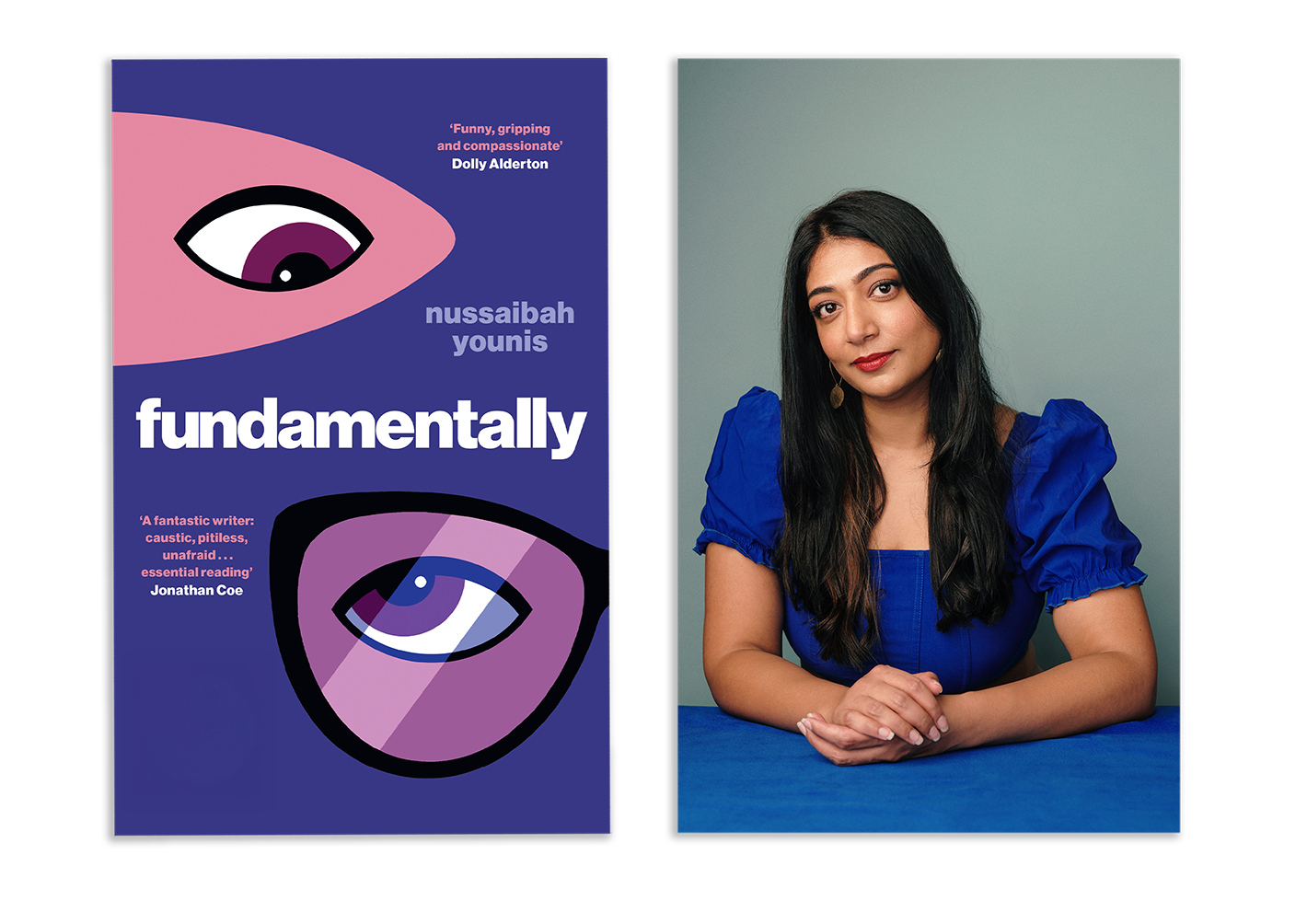
Nadia is an academic who's been disowned by her puritanical mother and dumped by her lover, Rosy. She decides to make a getaway, accepting a UN job in Iraq. Tasked with rehabilitating ISIS women, Nadia becomes mired in the opaque world of international aid, surrounded by bumbling colleagues.
Sara is a precocious and sweary East Londoner who joined ISIS at just fifteen.
Nadia is struck by how similar they are: both feisty and opinionated, from a Muslim background, with a shared love of Dairy Milk and rude pick-up lines. A powerful friendship forms between the two women, until a secret confession from Sara threatens everything Nadia has been working for.
A bitingly original, wildly funny and razor-sharp exploration of love, family, religion and the decisions we make in pursuit of belonging, Fundamentally upends and explores a defining controversy of our age with heart, complexity and humour.
An Interview with the Author:
WNSF: Congratulations on being selected for the 2025 Wilbur Smith Adventure Writing Prize shortlist! What does adventure writing mean to you? Would you have considered yourself an adventure writer before being shortlisted for the Prize?
Nussaibah: Adventure writing is about transporting a reader to a time, place and emotional experience they wouldn’t ordinarily have access to, and pulling them through that story with pace, plot, energy and excitement. I totally consider myself an adventure writer. I am easily bored, and a real thrill-seeker (in life and in fiction), so I was committed to writing an intense and rollicking read that would keep readers hooked! I also knew I wanted to write accessibly about tough and politically controversial subjects, so it was crucial to me that I address those issues through a fun, engaging, and adventurous plot that would prevent the topic of the book from becoming too heavy.
WNSF: Are there any particular books or authors which have made a lasting impact on you?
Nussaibah: I loved Tomorrow, and Tomorrow, and Tomorrow by Gabrielle Zevin, which tells the story of a group of friends starting up a video games company with all the physical and emotional jeopardy of an adventure tale. The stunningly evocative descriptions of the video games themselves takes readers on several mini-adventures within the overall arc of the novel. A tremendous work of fiction.
WNSF: Can you tell us about any adventurous experiences in your life? Have they influenced you as a writer or your writing?
Nussaibah: When I was eighteen, I travelled to Pakistan to visit family and I became very sick when I was out there. The experience gave me an intense anxiety about travelling abroad, to the point where I would get panic attacks whenever I left the UK – even if only to go to Paris! This was devastating because my life goal had been to work in peacebuilding in the Middle East. But even though I was gripped by terror, I decided I wasn’t going to let my anxiety dictate my life choices, so I took a giant leap and moved to Cairo. And then Beirut. And then Amman. And then Baghdad. Riding the waves of my fear whilst living in those countries – and sticking it out regardless - is the greatest achievement of my life.
Perhaps because I found simply being abroad so difficult, I had a surprising ability to put myself in risky and dangerous situations once I was living and working in the Middle East. The most difficult work I did inspired me to write my novel Fundamentally. I designed programs to re-integrate women and young people who were unfairly accused of affiliation to ISIS. It was an absolute nightmare trying to get these programs off the ground, and there was significant backlash against my work. During this time one of my closest colleagues was assassinated. I also received threats against me, my projects, and against the Iraqis who were participating in my programs. The challenge of my writing has been to capture both the tension and fear and intense stakes of my work in Iraq, whilst also creating space for the lighter elements – the sex, the jokes, the joy that is part of even the darkest human experiences.
WNSF: The Librarians and Library Staff who read, reviewed and selected your book for the shortlist had a few questions for you too. One asked: "Did you feel a lot of pressure when it came to showing the broad scope of the (British) muslim experience? Has there been any backlash from groups/individuals regarding the depiction of Nadia and Sara?"
Nussaibah: I refused to think about ‘representation’ when I was writing, because I think it is an unfair and limiting expectation that one novel should capture the totality of an entire community’s experience. All I could do was create totally honest and nuanced characters, who are funny and flawed and complex, and who feel true to my life and the lives I have witnessed. Since Fundamentally has been published, I have received countless, heartfelt messages of gratitude from Muslim readers, both in the UK and in the US, who have expressed feeling uniquely seen and understood by this novel and I’m so grateful to have touched people who experienced upbringings similar to mine.
WNSF: Another asked: "Was there a specific moment in time or an event that gave you the spark of inspiration to write Fundamentally?"
Nussaibah: When I first met women accused of being affiliated to ISIS living in a refugee camp in Anbar province in Iraq, I realized how close I myself had come close to being radicalized as a teenager. I knew then that I had a unique story to tell, because I understood the emotional experience of being attracted to extremism, and I had professional experience of trying to deradicalize and reintegrate women who had taken a road I had narrowly avoided.
WNSF: One asked: "Who was your favourite character to write? Why?"
Nussaibah: Pierre, a UN worker, is a cynical, nepo-baby, horny Frenchman with a Grindr addiction and a penchant for inventive insults. He was so much fun to write!
WNSF: Thank you! Can you tell us about a particular relationship between two characters in your novel and how you made it feel genuine?
Nussaibah: I’m particularly proud of how I depicted the relationship between Nadia, the UN worker tasked with running the deradicalization program, and Sara, the teenage ISIS bride. I thought of Nadia as an adult version of me, and Sara as a teenage version of me, and when I imagined trying to confront myself as a teenager, there was immediate electricity! Can you imagine trying to argue to your teenage self? It’s maddening, and infuriating and intense, but also there is so much scope for humour. Nadia acts like a patronizing, all-knowing, paternalistic big sister, and Sara, despite being naïve and blinkered, is surprisingly articulate and ferocious in her comebacks!
WNSF: A strong sense of place is vital to any great adventure story. What role does research play in your writing? How did you make your setting feel realistic?
Nussaibah: I couldn’t have written this book if I hadn’t spent the best part of ten years visiting and working in Iraq. I had an intimate knowledge of the settings – and knew what it was like to work in those challenging locations – and felt that I had a real advantage in being able to bring them to life for the reader.
WNSF: Thank you, Nussaibah! And congratulations once again on being shortlisted for the 2025 Adventure Writing Prize.
If you read and loved Fundamentally as much as we did, you can vote for it to win the Prize here. If you haven't yet read it, you can purchase your copy here:
About the Author:
Dr Nussaibah Younis is a peacebuilding practitioner and a globally recognised expert on contemporary Iraq. For several years, Dr Younis advised the Iraqi government on proposed programs to deradicalise women affiliated with ISIS. She has a PhD in International Affairs from the University of Durham, and a BA in Modern History and English from the University of Oxford. Dr Younis was a Senior Fellow at the Atlantic Council in Washington DC, where she directed the Task Force on the Future of Iraq and offered strategic advice to US government agencies on Iraq policy. She lived in Washington D.C. and in Cambridge, Massachusetts, where she was a Post-Doctoral Fellow at the Harvard Kennedy School’s Belfer Center. Dr Younis has published Op-Eds in The Wall Street Journal, The Guardian and The New York Times and provided on-air commentary for the BBC and Al-Jazeera. She was born in the UK to an Iraqi father and a Pakistani mother, and has worked in Washington D.C., Dubai, Cairo, Beirut and Baghdad. She currently lives in London. Her debut novel, Fundamentally, is out with Weidenfeld & Nicolson in the UK and Tiny Reparations in the US in 2025.
What Our Reviewers Said:
"A unique and fascinating story focusing on a serious topic written by an author with personal and academic experience into the subject, told primarily in a light and humorous way."
"Nussaibah Younis’ Fundamentally is one of those rare novels that makes you laugh even as it forces you to confront deeply unsettling questions. It’s satirical, sharply observed, and profoundly thought-provoking—a book that takes on radicalization, Western intervention, religious belief, and the sheer absurdity of the bureaucratic systems that claim to help but often hinder."