
Samantha Sotto Yambao's Water Moon is shortlisted for the 2025 Adventure Writing Prize.
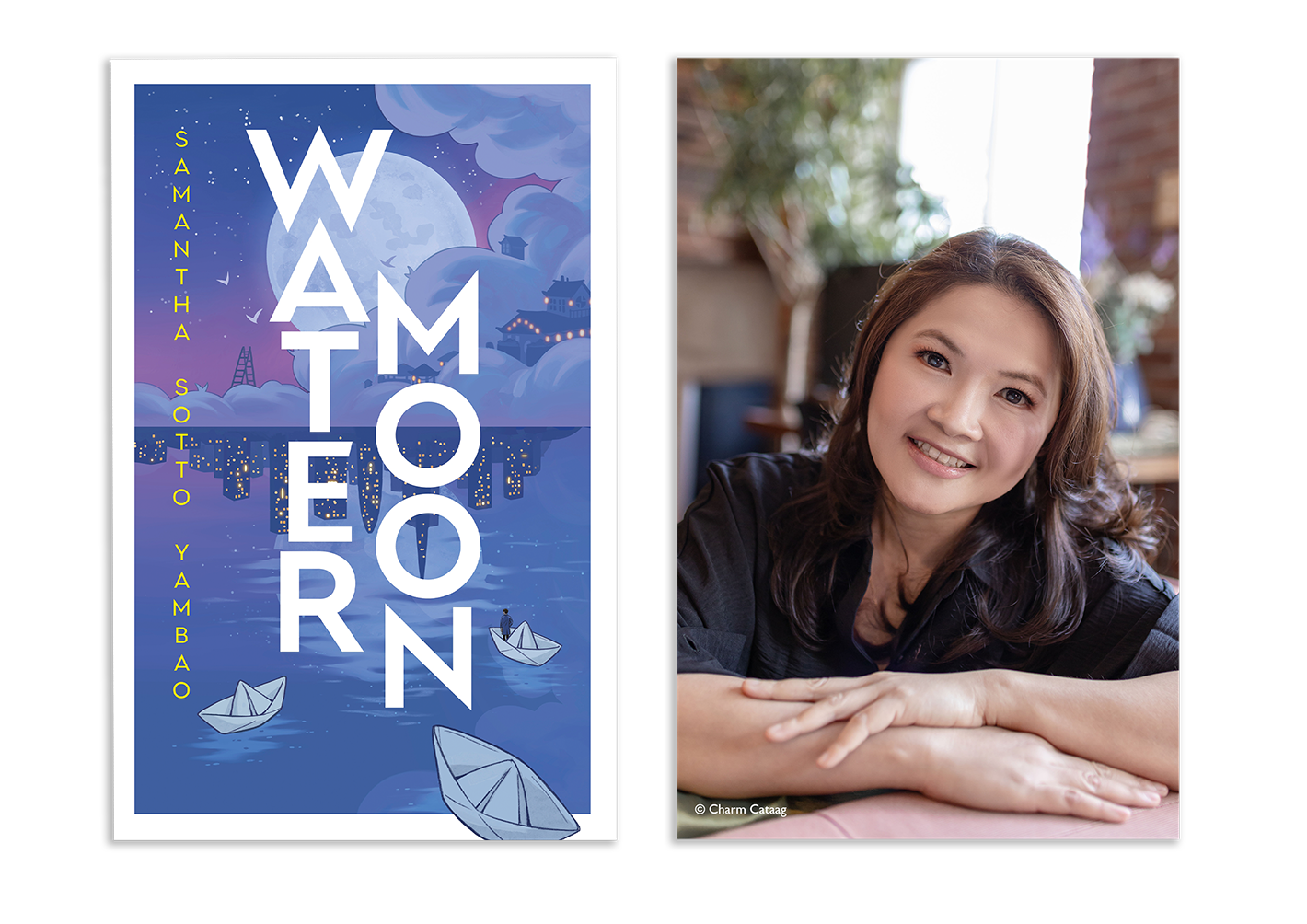
On a backstreet in Tokyo lies a pawnshop, but not everyone can find it. Most will see only a cosy ramen restaurant. And just the chosen ones – those who are lost – will find a place to pawn their life choices and deepest regrets.
Hana Ishikawa wakes on her first morning as the pawnshop's new owner to find it ransacked, the shop’s most precious acquisition stolen and her father missing. And then into the shop stumbles a charming stranger, quite unlike other customers. For he offers help, instead of seeking it.
Together, they must journey through a mystical world to find Hana’s father and the stolen choice – through rain puddles, hitching rides on paper cranes, across the bridge between midnight and morning and through a night market in the clouds.
But as they get closer to the truth, Hana must reveal a secret of her own – and risk making a choice she will never be able to take back.
An Interview with the Author:
WNSF: Congratulations on being selected for the 2025 Wilbur Smith Adventure Writing Prize shortlist! What does adventure writing mean to you? Would you have considered yourself an adventure writer before being shortlisted for the Prize?
Samantha: An adventure is a journey that engages all your senses and makes you feel alive – and so is the process of writing one. There are many types of adventures and adventure writing, but if they have one thing in common, it is that they immerse you in a new experience or make you experience old things in a new way. Either way, they leave you changed. In that sense, even if you probably won’t find many bookstores displaying Water Moon on their traditional adventure writing shelf, it is, at its core, a journey I took as a writer into a world that held me in its spell, terrified me at times, and left me feeling a little braver. And so the answer is YES, I do believe that I’m an adventure writer in my heart of hearts!
WNSF: That's wonderful to hear! Are there any particular books or authors which have made a lasting impact on you?
Samantha: Since we’re talking about adventure writing, I’d be remiss if I didn’t mention how The Lost Horizon utterly swept me away as a kid. Shangri-La found its way into my dreams, and I think that the sense of wonder that book made me feel as a child is something that I’ve always been chasing.
WNSF: Can you tell us about any adventurous experiences in your life? Have they influenced you as a writer or your writing?
Samantha: Some might say that growing up in the 80s was an adventure in itself, but I’ve since added to that by doing everything from solo skydiving to swimming with whale sharks. My dad, you see, likes saying that you can’t put a price on memories, and though my credit card vehemently disagrees with him, his words have become a motto for me. I’ve bungee jumped, celebrated the hubby’s birthday on a hot air balloon, and gone on a camel ride along the beach with my family. The adventure that changed the course of my life, however, was the backpacking trip I took across Europe in my early twenties. Armed with a borrowed copy of Frommers Europe on $50 a Day, a Eurail Pass, and a return plane ticket departing from Greece, I made my way across the continent without a credit card, hotel bookings, or a phone (to be fair, mobile phones weren’t really a thing back then). This trip became the inspiration for my debut novel, Before Ever After, a story about an immortal man who runs a tour company that takes travellers across Europe and history – and which may or may not be my humble homage to Dr. Who.
WNSF: The Librarians and Library Staff who read, reviewed and selected your book for the shortlist had so many questions for you! One of them said: "I hugely enjoyed Water Moon. It has served as my introduction to the genre of magical realism (I now look at puddles in an entirely new light!) and I hope that subsequent books that I read in this genre are as enthralling – thank you!" They asked: "Would you consider somehow revisiting Hana and Keishin’s love story, or at least the intriguing and fascinating otherworld you have imagined for them? I would love to discover more about that rich, exotic canvas."
Samantha: Thank you so much! There’s a certain magic that comes with having characters live on in readers’ minds to carry on their story and so I would say that I’m quite happy that I left Hana and Kei in a place where they can now go off on their own adventures without me. As for the rest of the cast of characters, I can definitely say that they have stories that I would love to share in the near future.
WNSF: They also asked: "Hana’s father’s actions feel almost selfish. I can understand his motivation, but Hana faces deadly peril as a result. The novel’s structure stems from that decision. Would you think of him as a villain (for the best of motives), along with the Shiikuin?"
Samantha: I think that he is a villain in the same way that people are the heroes and villains of our own stories. Real people are not black or white and there are times that our motives and decisions fall within a spectrum of gray. I would also argue that the Shiikuin are not just villains either, but a product of a system based on flawed beliefs.
WNSF: Another asked: "In your short bio online, you are amongst other things described as a professional daydreamer. How important do you think being a daydreamer or allowing oneself to daydream is for the creative process?"
Samantha: Daydreaming is an absolutely essential part of the creative process. It’s the time when our mind finds the connections between the random things we’ve gathered as we go about the day-to-day business of living and weaves them into the best surprises. I would go as far as to say that I do my writing while daydreaming and that when I’m at my desk with my laptop, I’m just typing what I’ve already seen.
WNSF: One asked: "Water Moon reads as a fantasy clothed in very whimsical dreamy settings, yet serious real-life issues such as the loss of parents and living with regret and pending dangers poses the possibility of the reality interfering with the dream. Was it difficult to ensure a balance of these elements?"
Samantha: I didn’t feel the need to make a conscious effort to balance them because I believe it’s the real-life elements of the book that allows its more fantastical elements to work. The way they intermingled developed in a very organic way as I wrote, with each element supporting the other.
WNSF: Another asked: "Your setting is of course a pawnshop where regrets or choices are bartered with. Pawn shop items are unique in the sense that the items once belonged to others. Was that tool used to indicate the connections between humans and how we have the power to influence one another or was at an idea more personal to yourself?"
Samantha: The idea sprung from the ubiquitous pawnshops in Manila, the city I live in. They made me think about how the items people pawned weren’t really just simple objects, but the embodiment of all the choices and circumstances that led them to the pawnshop. I thought that this was a good tool to use for a story that is essentially, as you observed, about the connection between humans and the rippling effects our choices have on each other and ourselves.
WNSF: One wanted to know: "One of the themes that stood out for me in Water Moon was how fragile time is, and how often, we live with choices made and accept fate. Do you yourself believe in fate?"
Samantha: I don’t believe in fate. I believe that every person is born with the potential to live a meaningful life – and that our ability to make this a reality depends on both the choices we make for ourselves and the way we respond to the choices that other people make.
WNSF: Finally, one asked: "The Shiikuin who collect the choices, serve as protectors of sacred laws, and could be described as the gatekeepers to Hana’s world order as she knows it. Was there a religious influence that came to you when you created them? The idea of gods as gatekeepers perhaps?"
Samantha: Rather than drawing from religion, I took the inspiration for Shiikuin from the flawed organizations and systems that I’ve observed in real life – monsters of our own creation that only have power over us because we give them permission to.
WNSF: Thank you so much. A strong sense of place is vital to any great adventure story. What role does research play in your writing? How did you make your setting feel realistic?
Samantha: I treat setting as a character in the book and like to develop it with as much care as I develop the other characters in the story. Doing this would not be possible without research. Luckily, I am the type of strange creature who enjoys research as much as writing (there was a reason I was president of our elementary school library club). And even though Water Moon is set in a fantasy version of Japan, I felt that it was extremely important to honour the source culture by making sure that the details I chose to include were accurate and written in a respectful way. I believe that the more fantastical the story, the more grounded and authentic its foundation should be.
WNSF: What would you consider to be the upsides, and the downsides, of being an author?
Samantha: The upside of being an author is keeping your inner child alive for a living. The downside is that it’s extremely tough to find a playground to play in and other kids who want to play with you.
WNSF: Thank you so much for answering our questions, and congratulations once again on being selected for the 2025 Adventure Writing Prize shortlist!
If you read and loved Water Moon as much as we did, you can vote for it to win the Prize here. If you haven't yet read it, you can purchase your copy here:
About the Author:
Samantha Sotto Yambao is a professional daydreamer, aspiring time traveller, and speculative fiction writer based in Manila. She is the author of Before Ever After, Love and Gravity, A Dream of Trees, and The Beginning of Always. Water Moon is her latest novel and UK debut.
What Our Reviewers Said:
"This novel is a marvel! I loved the premise, the beautiful prose and the richness of the world invented by the author. A book I did not want to finish and I am jealous of the talent required to create this thought provoking work."
"Every so often, a book comes along that feels like stepping into a warm embrace—soft, soothing, yet infused with an undercurrent of magic that tingles at the edges of your imagination. Water Moon by Samantha Sotto Yambao is exactly that kind of book—a masterful blend of whimsical fantasy, heart-tugging emotion, and profound philosophical musings, wrapped in the delicate artistry of lyrical prose."