
BLOG: #10for10 Insights From the Editor, With Martin Fletcher
The #10for10 campaign marks the tenth anniversary of the Wilbur Smith Adventure Writing Prize. Throughout 2026, #10for10 is bringing you behind-the-scenes content: advice, insights, anecdotes and recommendations from the minds of the writers, readers, adventurers and publishing professionals we work with.
Martin Fletcher started his career in publishing as a copywriter at Sphere Books, working his way up to Editor-in-chief at Simon & Schuster and Publisher-at-Large of Headline (Hachette), with stints at Picador and Macmillan along the way. Martin is now a freelance editor for publishers and literary agents including Little Brown, Hodder & Stoughton, Bonnier, Curtis Brown, Conville & Walsh and Tibor Jones. He has commissioned and edited a variety of literary and genre authors including Clive Cussler, David Baldacci, Wilbur Smith and Simon Scarrow.
Martin has worked with the Prize's New Voices writers for several years now, helping them to hone their fledgling ideas into finished first drafts.
If you're considering submitting to the New Voices award, or are mid work-in-progress, read on...
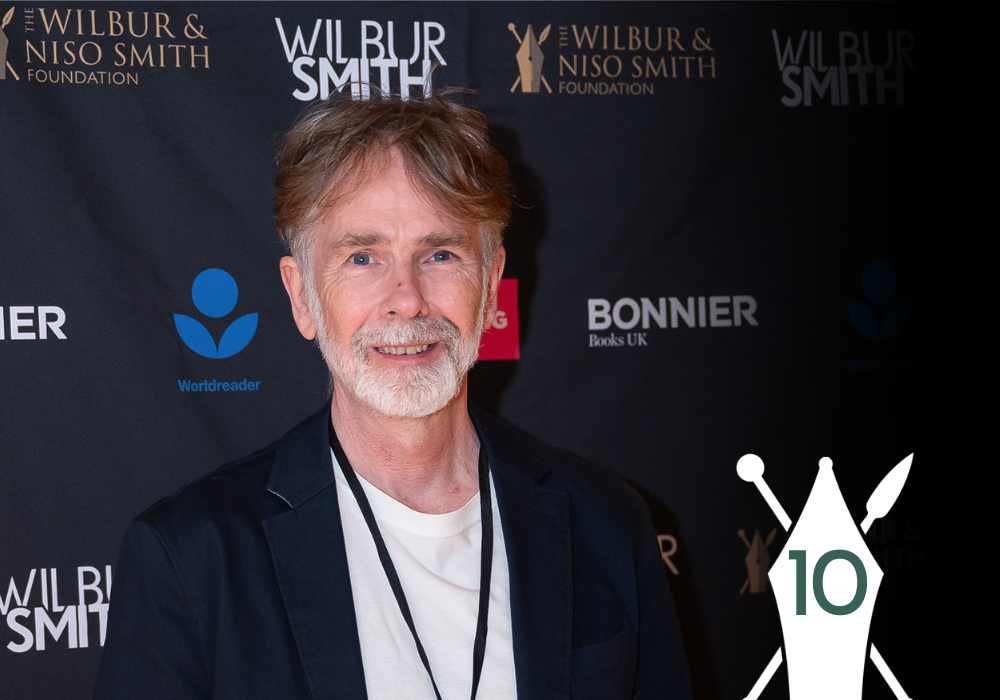
Insights From the Editor, with Martin Fletcher
WNSF: When you first read a manuscript, what is it that excites you most?
MF: An original voice, a daring vision, a confidence with language. I also love entering new worlds, be it a place or a period, in the past or the future. Engaging characters, pace and lots of action which could be literal action or the imaginative leaps and bounds of thought, ideas and description.
WNSF: What’s the most common mistake you see in early drafts from new writers?
MF: Generally it’s overwriting, an over-reliance on adjectives and adverbs to boost descriptions, the effects of which clutter, obscure and slow the pace. Understatement is always better, allowing the reader to participate in creating the scene, enter the story’s spaces, but what to leave out comes with confidence and practice.
Pace is also a common issue, too slow and the readers loses patience. It’s about finely judging the rhythm of a novel, where to decelerate to draw the reader closer and where to speed up to excite and enthral. A ponderous or unengaging opening will hold back a novel, and it’s not enough for an author to assume that the better writing comes later. It’s harsh but the 50 page rule tends to prevail – if it doesn’t draw the reader in by 50 pages, interest is not sustained.
WNSF: How do you know when a story isn’t quite working? Is there anything that’s often missing?
MF: It’s usually a facility with language and voice; if both come together then there is potential. A clear or emerging narrative purpose is also important – what is the novel trying to achieve, why is it being written, who will read this?
WNSF: What separates a good story from one that’s ‘unputdownable’?
MF: Pace, subject, vibrancy of character, sparkling, witty dialogue, a plethora of incident, character jeopardy, something that captures the zeitgeist in so far as it addresses issues that matter, that have immediate and broad relevance. Short chapters also help, cliffhanger endings, devious plots that urge the reader to find out what happens next and in the end.
WNSF: For first-time writers at the very beginning of a novel, what should they focus on getting right?
MF: The opening chapters are the shop window – they have to be the author’s best writing and to create a sense of anticipation, a reason to continue reading. Make the opening seductive, intriguing, invite curiosity. In a world of infinite distraction and choice, why should a reader choose your novel in which to invest valuable time and emotional energy?
WNSF: What do you think holds new writers back most when they’re starting out?
MF: The sheer epic scale of the novel form with its daunting, long-distance beginning, middle and end journey. Having said that, short novels have found favour recently attracting significant sales – Orbital by Samantha Harvey, Three Days in June by Anne Tyler, The Party by Tessa Hadley, Small Things Like These by Claire Keegan for example. It’s often useful to put together a novel plan outlining how the story will develop and the key conflicts and resolutions, or even a more detail chapter by chapter synopsis. However, some writers are more instinctive and allow the novel to develop organically. Whatever the approach, the key is to just write, put it down and keep going. It can be a long hard slog, but persistence is all. As George Orwell put it: 'Writing a book is a horrible exhausting struggle like a long bout of some painful illness'. Completing the novel is the cure.
WNSF: When you’re working with a new writer, what’s the first thing you help them tackle?
MF: Often it is the first feedback, praising what is good and pointing out where aspects are not quite working. It can be energising for an author to receive close analysis of their work and often a simple steer can lead to unexpected lightbulb moments which illuminate new avenues of thinking and invention.
WNSF: What role does editing play in turning a promising draft into a finished novel?
MF: I would say this, but I think it’s absolutely essential to have an empathetic and experienced editor give an author’s work an objective, dispassionate review. Writers are submerged in their work, navigating the deep dives of composition, the editor’s role is to help their novel float and hopefully set sail.
WNSF: For those considering entering the New Voices award, what advice would you give them before they submit?
MF: Work on the opening until it’s as clean and polished as you can make it. Try to showcase your best writing at this early stage, measured, balanced, not too purple or overwritten, creating a sense of impending drama, conflict and an anticipation of events to come. Try not to fall into the trap of ‘that’ll do as a start, then it’s going to get better’. This is fine so long as you return to the beginning and rework it to be as good as the rest. Make sure the presentation is pristine – avoid repeated words in the first few paragraphs, and ensure there are no typos.
WNSF: And finally, what book(s) or author(s) have you admired recently?
MF: I’ve just finished reading Graham Greene’s The Quiet American which is a subtly powerful critique of US expansionist policy, in this case Vietnam, which has obvious parallels today; I very much enjoyed Question 7 by Richard Flanagan which contains the most terrifying final chapter you’ll ever read!; All Fours by Miranda July is a wonderfully funny, compassionate, generous novel about claiming emotional space which eschews boundaries; Our Evenings by Alan Hollinghurst is an exquisitely humane meditation on class, sexuality and the violence of change; The God of the Woods by Liz Moore, a high class gripping thriller of mood, atmosphere and wilderness; Street-Level Superstar by Will Hodgkinson for all those fans of 80s/90s indie music and the darkly comic agonies of a would-be pop star who never quite made it.
WNSF: Thank you for making the time for #10for10, Martin, and for the guidance you give new writers!